

What’s up, fellow running geeks! Alex here, and holy smokes, we need to talk about what might be the most revolutionary marathon shoe ever created. The adizero adios pro evo 3 has literally changed the game, and I’ve been obsessing over every detail since the news broke.
The Sub-2 Hour Milestone Has Finally Fallen
So here’s the bombshell that’s rocking our running world right now: Kenyan superstar Sabastian Sawe just became the first human to break the two-hour marathon barrier in an actual competitive race. Let that sink in for a sec. 1:59:48. In the London Marathon. Not in some controlled environment with pacers and perfect conditions like Kipchoge’s 1:59:40 from a few years back. This was the real deal.
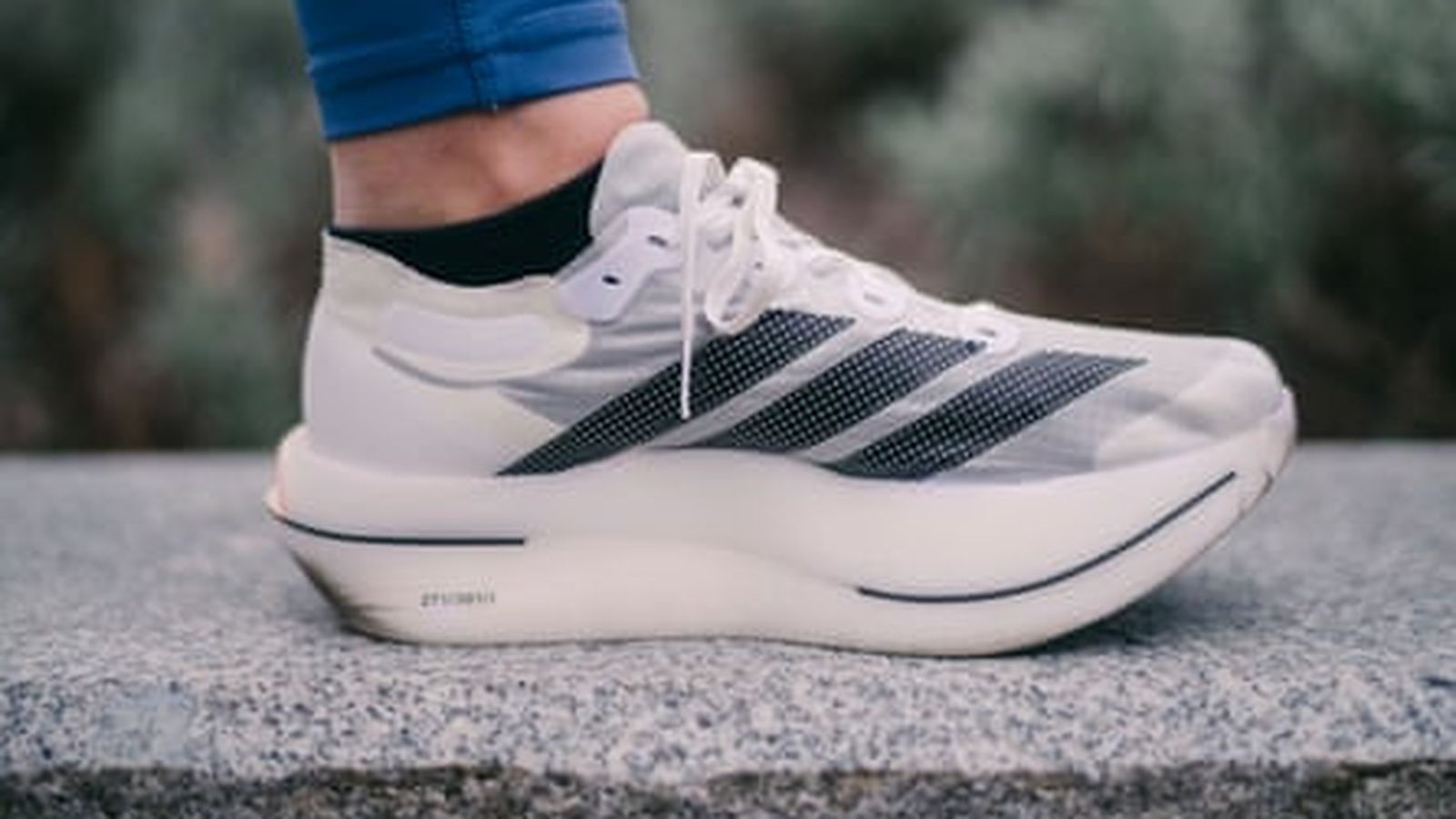
And what was on Sawe’s feet during this historic moment? You guessed it – the adizero adios pro evo 3.
The $4,000 Problem: Accessibility vs. Innovation
Let’s get real for a minute. These shoes are basically unobtanium for most runners. Adidas has made them in extremely limited quantities, and the resale market has gone absolutely bonkers. We’re talking $4,000 a pair! That’s not a typo. Four thousand dollars for running shoes that are designed to last maybe one or two races at most.
This creates a pretty serious dilemma for our sport. On one hand, I’m geeking out over the incredible technology and innovation. On the other hand, my stomach turns thinking about how this creates such an uneven playing field. If you’re not sponsored by Adidas or willing to drop the equivalent of a decent used car on shoes, you’re basically at a competitive disadvantage before the race even starts.
The Tech That Makes These Shoes Special
From what I’ve gathered, the adios pro evo 3 features:
- Ultra-lightweight proprietary foam that offers insane energy return
- Advanced carbon-fiber plate geometry that optimizes your stride
- A minimalist upper that cuts weight to absolute bare essentials
- Total weight that’s reportedly lighter than anything else on the market
The entire shoe is engineered around one concept: maximum speed with minimum weight. Everything else – durability, versatility, value – is secondary. These are pure racing weapons, not daily trainers.
The Environmental Question
I’ve been thinking a lot about the sustainability angle here. When you create a $4,000 shoe that’s designed to be trashed after one or two races, what message does that send? In an era where we’re all trying to reduce waste and be more environmentally conscious, these super shoes feel like a step in the wrong direction.
Don’t get me wrong – I’m not trying to be holier-than-thou. I’ve got a closet full of running shoes myself. But there’s something about the extreme disposability of these elite racing shoes that makes me uncomfortable. If this becomes the new normal, we’re looking at a future where serious marathoners might be burning through multiple pairs of ultra-expensive, barely-recyclable shoes just to stay competitive.
Regulatory Concerns: Where Do We Draw the Line?
World Athletics is gonna have their hands full with this one. At what point does a shoe cross the line from “performance enhancer” to “mechanical advantage”? The adios pro evo 3 is pushing right up against that boundary, and it’s forcing some serious conversations about what fair competition looks like.
Remember when they had to create rules after the original Nike Vaporfly came out? We’re about to see that debate reignited, but with even higher stakes. The sub-2 barrier falling in a competitive race changes everything.
The Ripple Effect Across the Running Industry
Adidas has thrown down the gauntlet with the adios pro evo 3, and you better believe Nike, Hoka, Asics, and everyone else is scrambling to respond. This is going to trigger an arms race in marathon shoe technology that will eventually trickle down to the shoes available to everyday runners like us.
I’m particularly interested in how this will affect mid-pack marathoners. Will we start seeing more accessible versions of this technology? Or will there be an ever-widening gap between what the elites wear and what the rest of us can afford?
What This Means for Your Next Marathon
Look, I’m not saying you need to mortgage your house to buy these shoes. For 99.99% of us, the difference between the adios pro evo 3 and a good pair of Saucony Endorphin Pros or Brooks Hyperions isn’t going to make or break your race.
But what I am saying is that we’re witnessing a paradigm shift in what’s possible in marathon running. The psychological barrier of the 2-hour marathon has been shattered, and that’s going to have ripple effects throughout the sport. Expect to see more aggressive race strategies, faster course records, and maybe even a shift in how we approach training.
My Honest Take: Mixed Feelings
I’ve been running marathons for over 15 years, and I’ve never been more conflicted about a shoe release. Part of me is absolutely stoked about what the adios pro evo 3 represents – the pinnacle of human innovation pushing the boundaries of what’s physically possible. That’s the gear geek in me talking.
But the runner and coach in me worries about what this means for the sport I love. When equipment becomes such a decisive factor, does that diminish the human achievement aspect? When only the most privileged athletes have access to the best gear, how does that affect the beautiful democracy of running?
I don’t have easy answers. Maybe World Athletics will step in with new regulations. Maybe Adidas will increase production and bring the price down. Or maybe this is just the new reality we have to accept – that top-level marathon running is becoming more like Formula 1, where technology and equipment play an increasingly central role.
The Future of Marathon Running
Whatever happens next, one thing’s for sure – the adizero adios pro evo 3 has changed marathon running forever. The two-hour barrier that once seemed like the ultimate human limit has fallen, and there’s no putting that genie back in the bottle.
For better or worse, we’re entering a new era of marathon running. Records will fall. Expectations will shift. And the conversation about technology’s role in the sport will only intensify.
I’d love to hear your thoughts on this. Are you excited about these technological advancements? Concerned about the implications? Hoping to get your hands on a pair regardless of the cost? Drop a comment below or hit me up on social – I’m genuinely curious about where the running community stands on this.
Until next time, keep those legs moving and those eyes on the horizon. The future of marathon running is here, and it’s faster than we ever imagined.
– Alex