

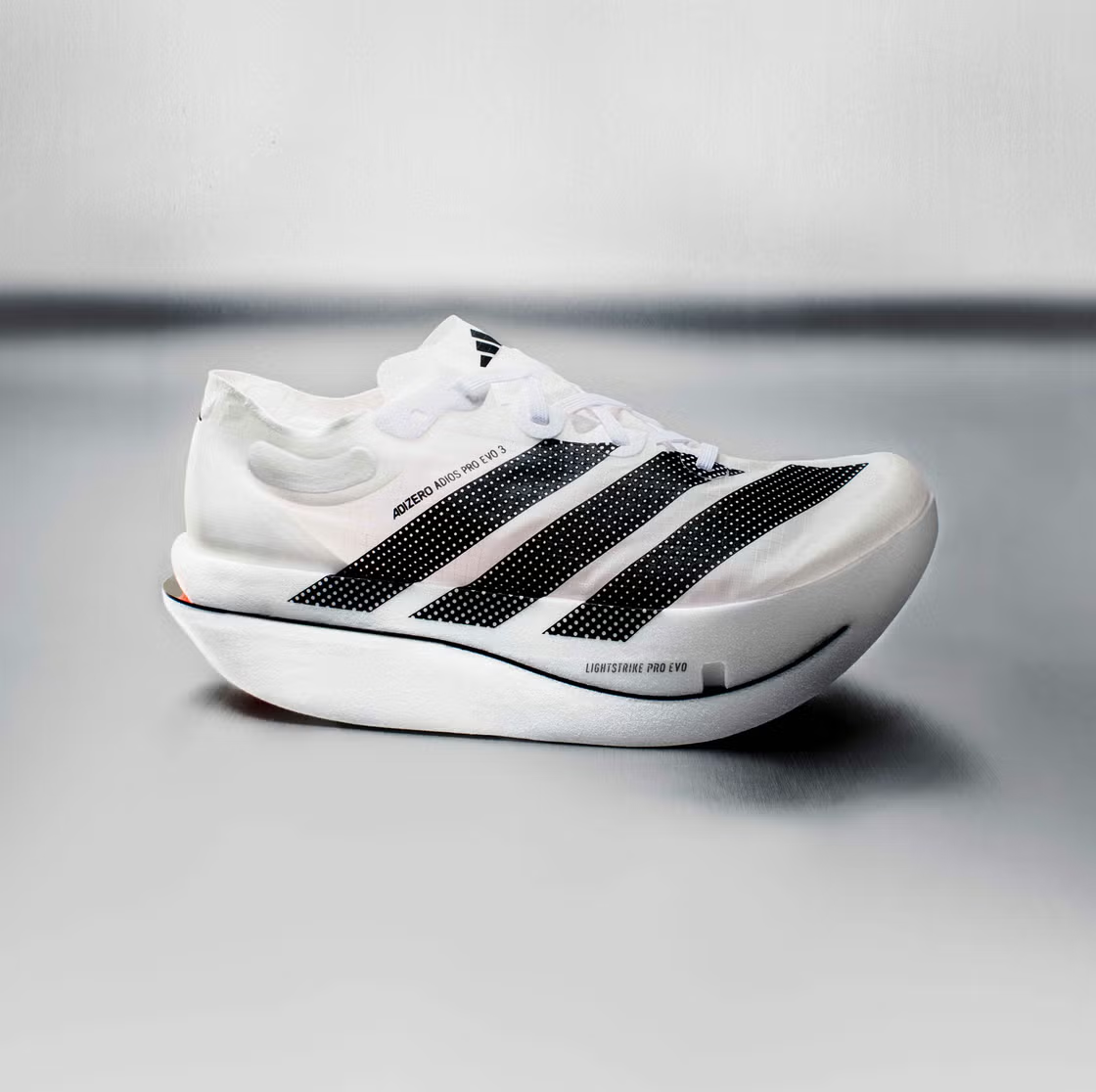
Let me tell you something – I’ve been geeking out over running shoes for nearly a decade now, and I’ve NEVER seen anything quite like the adizero adios pro evo 3. As someone who’s logged thousands of miles in everything from bargain bin trainers to $250 carbon-plated racers, I thought I’d seen it all. But Adidas just dropped something that’s genuinely revolutionary, and I can’t stop obsessing over the specs.
The Shoe That Broke the 2-Hour Barrier
Unless you’ve been living under a rock (or just don’t care about running, which is fair), you probably heard about what went down at the London Marathon on April 27, 2026. Sabastian Sawe crossed the finish line in 1:59:30, becoming the first person EVER to run a sanctioned sub-2-hour marathon. And just 11 seconds behind him? Yomif Kejelcha in 1:59:41. Two sub-2 performances in one race! Oh, and let’s not forget Tigst Assefa smashing the women’s-only world record with 2:15:41.
What did all three athletes have on their feet? You guessed it – the adizero adios pro evo 3.
The Weight: A Ridiculous 97 Grams
OK, I need to geek out about this for a sec. This shoe weighs NINETY-SEVEN GRAMS in a UK men’s 8.5. That’s about the same as a kiwi fruit or a bar of soap. For context, my daily trainers weigh around 280 grams, and even my current racing flats are over 200g. We’re talking about a shoe that’s literally 65% lighter than what most of us race in.
There’s this rule of thumb in running that for every 100g of weight you can drop from your shoes, you gain roughly a 1% efficiency boost. So theoretically, just the weight reduction alone could give elite runners a meaningful edge over the marathon distance.
How Did They Get It So Light?
Adidas didn’t just trim down an existing shoe – they basically reimagined what a running shoe could be. According to Mark Makowski, senior VP of creative direction and innovation at Adidas, they approached this project with a simple philosophy: “If it increases performance, it stays. If it doesn’t, it gets taken off.”
The Midsole: Lightstrike Pro Evo
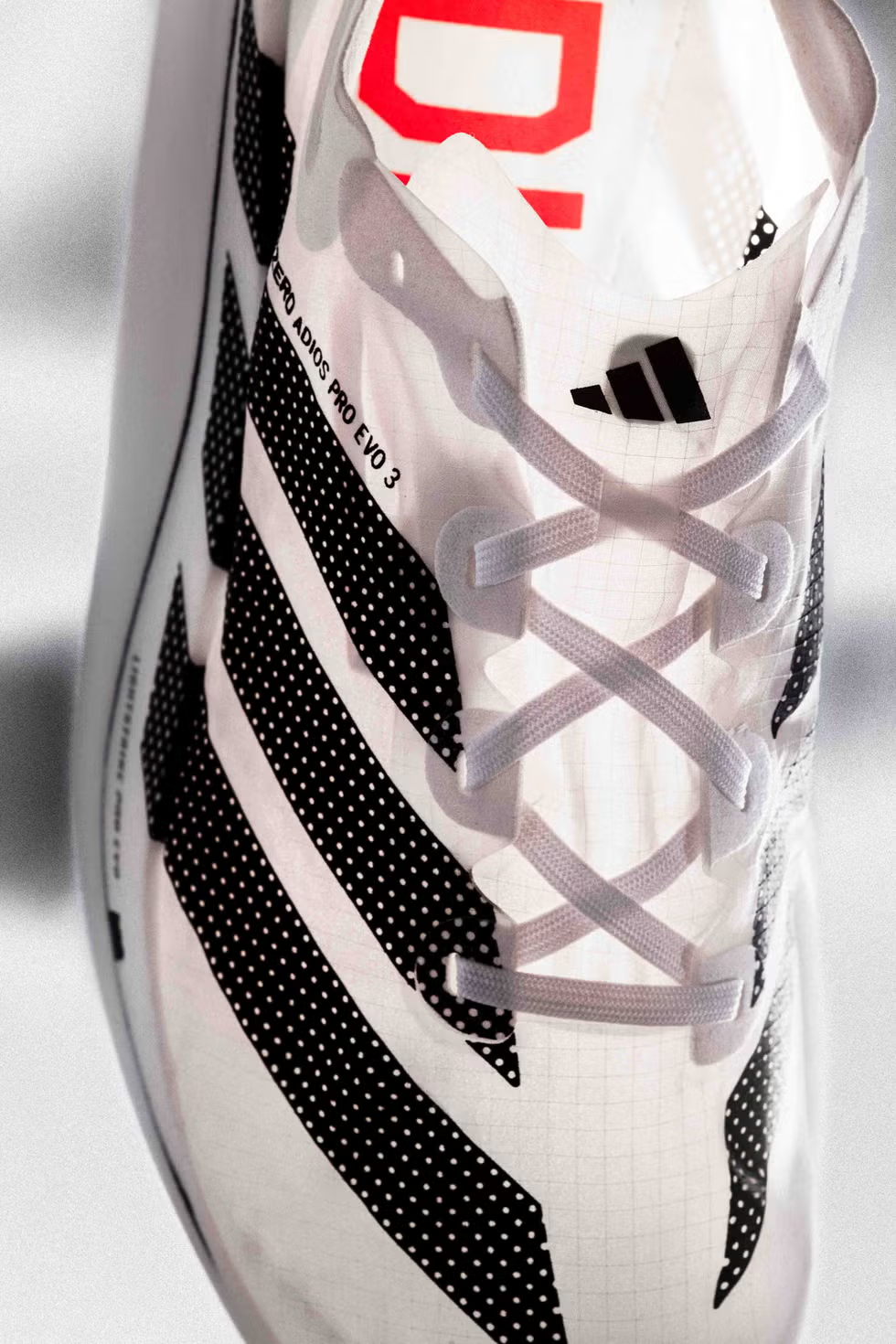
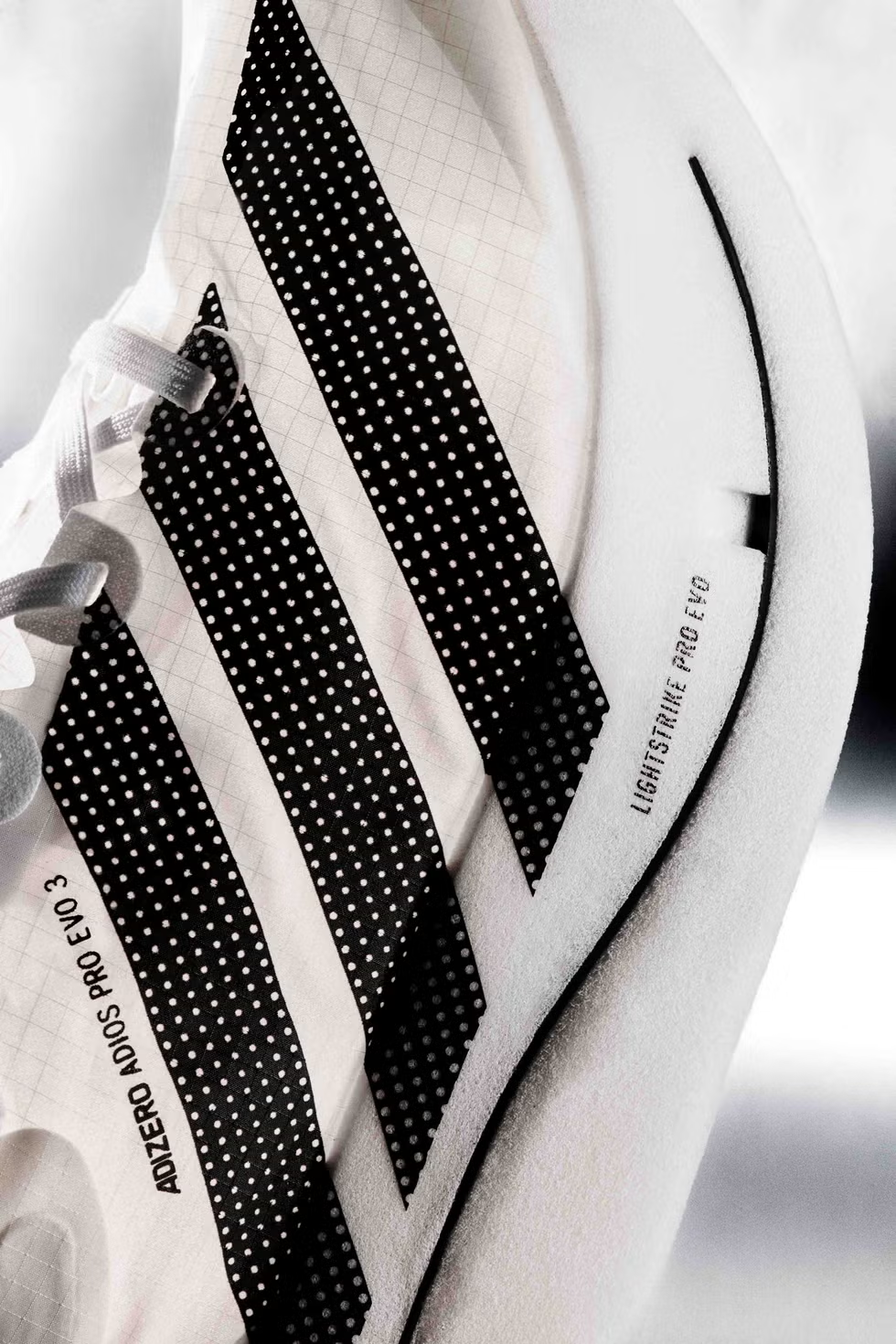
The real magic happens in the midsole. Adidas developed a completely new foam called Lightstrike Pro Evo that’s 50% lighter than the previous version while delivering 11% more energy return. That’s honestly mind-blowing – usually when you make something lighter, you sacrifice performance. But they’ve somehow managed to make it both lighter AND bouncier.
I’ve tried a lot of super foams over the years – ZoomX, FuelCell, Pwrrun PB – but this seems to be operating on a different level. The foam is insanely responsive while weighing practically nothing. Adidas claims it improves running economy by 1.6% compared to the previous model, which doesn’t sound like much until you realize that’s the difference between a 2:00:30 marathon and a 1:59:30.
The EnergyRim: Rethinking Carbon
Here’s where things get really interesting. Instead of using the carbon rod system from the Evo 2 (which had five carbon-infused fingers running through the midsole), the Evo 3 uses something called an EnergyRim. It’s basically a carbon-infused horseshoe-shaped element that runs around the edges of the foot.
The theory behind this design is pretty clever. By moving the carbon to the edges, your foot has more direct contact with the foam, maximizing compression and energy return. The rim provides the stiffness and stability you need, but you’re still getting that sweet, sweet foam bounce with each step.
This is a totally different approach than what Nike and other brands have been doing with their full-length carbon plates. I’m fascinated to see if this horseshoe design becomes the new standard or if it’s just Adidas doing their own thing.
The Upper: Inspired by Kitesurfing
The upper is where they’ve really pushed the boundaries of what’s possible. It’s so thin and translucent that it almost looks like it could tear if you look at it wrong. But appearances can be deceiving – Adidas claims the polyester yarn they’re using is actually 50% stronger than previous materials.
What’s wild is that they took inspiration from kitesurfing sails to develop this material. It’s designed to be ultra-lightweight but still provide enough structure to keep your foot locked in place. The upper alone is 33% lighter than the previous version, which is no small feat.
The Outsole: Minimal But Strategic
When you’re trying to build the world’s lightest running shoe, you can’t slap a thick rubber outsole on it. The Evo 3’s outsole consists of just two pieces that weigh a combined 8 grams. EIGHT. GRAMS.
There’s a small patch of cast polyurethane at the heel for the occasional heel strike, but the main action happens at the forefoot. There’s a super thin (we’re talking 0.5mm) piece of Continental rubber with tiny 0.1mm lugs. It’s basically the minimum amount of rubber needed to provide grip for a mid-to-forefoot striker.
This minimal approach makes sense for elite marathoners who have perfect form, but I do wonder about durability for us mere mortals. Then again, at $450 a pop, this isn’t exactly designed to be your everyday trainer.
The Price Tag: $450 (If You Can Find It)
Speaking of price… yeah, these babies aren’t cheap. The retail price is set at $450, which makes them one of the most expensive running shoes ever made. But good luck finding them at retail – the limited release on April 25th sold out in minutes, and pairs are now going for upwards of $4,600 on resale sites. That’s not a typo – we’re talking nearly TEN TIMES the retail price!
Adidas has said a wider release is planned for the fall marathon season, but I’m not holding my breath that they’ll be any easier to get. When you’ve got a shoe that just helped break one of sport’s most significant barriers, demand is going to be through the roof.
The Controversy: Technology vs. Human Achievement
Let’s address the elephant in the room – the tech debate. Every time a major breakthrough happens in running shoes, we get the same questions: Is it the shoe or the athlete? Are we reaching a point where technology matters more than training?
My take? It’s both. No shoe is going to turn me into a 2:05 marathoner (I wish!), but at the elite level where seconds matter, equipment makes a difference. Sawe, Kejelcha, and Assefa are incredible athletes who put in thousands of hours of brutal training to get where they are. The shoes are just the final piece of the puzzle that helps them maximize their potential.
And let’s be real – this is how sports evolve. Tennis rackets got bigger, swimsuits got more hydrodynamic, and running shoes got more efficient. The human element is still what matters most, but pretending technology doesn’t play a role is just naive.
The Future: Will These Technologies Trickle Down?
The most exciting part for everyday runners like me is what this means for the future. Patrick Nava, general manager of Adidas Running, called the Evo 3 a “proof of concept” and compared it to a Formula One car. The technologies developed for this shoe will eventually make their way into more accessible models.
Nava specifically mentioned that we’ll see “a more mass application in the fall,” which suggests some of these innovations might appear in the next generation of Adizero Adios Pro or Boston models. They probably won’t be sub-100g, but they might incorporate elements of the Lightstrike Pro Evo foam or the EnergyRim design.
As a shoe geek, that’s what gets me most excited. The Evo 3 isn’t meant for regular runners – it’s a specialized tool for the absolute elite. But the R&D that went into creating it will benefit all of us down the line.
The Bottom Line: A Historic Shoe for a Historic Moment
The adizero adios pro evo 3 isn’t just another super shoe – it’s a genuine breakthrough in running footwear design. By focusing obsessively on weight reduction without sacrificing performance, Adidas has created something that truly pushes the boundaries of what’s possible.
Is it worth $450 (let alone the insane resale prices)? For 99.9% of runners, probably not. But that’s not really the point. Like the four-minute mile or the first sub-10-second 100m, the sub-2-hour marathon represents one of running’s great barriers. The fact that the adizero adios pro evo 3 was there for this historic moment ensures its place in running history, regardless of whether you or I ever get to try a pair.
For now, I’ll keep obsessing over the specs and dreaming about what it would feel like to run in something that weighs less than my phone. And I’ll be watching closely to see how these technologies evolve and spread throughout the running shoe market in the coming years.