

Holy crap, you guys. I’m still trying to pick my jaw up off the floor after what went down at the London Marathon this past weekend. The running world just witnessed something we’ve been chasing for DECADES – the official sub-2-hour marathon barrier has finally been broken, and adidas just dropped the shoe that made it happen.
The Sub-2 Dream Just Became Reality
Look, I’ve been obsessing over marathon shoes since the original Nike Vaporfly dropped and changed the game back in 2017. I’ve tested pretty much every carbon-plated monster on the market. But what adidas just unleashed with the adizero adios pro evo 3? This is next-level stuff that’s got me geeking out harder than when I found that rare colorway of the OG 4%.
Kenya’s Sabastian Sawe just crossed the London finish line in 1:59:30. Let that sink in. 1:59:30! The first OFFICIAL sub-2 marathon in human history. Not some special exhibition like Kipchoge’s 1:59 Challenge with pacers and controlled conditions – this was a legit World Marathon Major with competition, crowds, and a certified course.
But wait, it gets better. Ethiopia’s Yomif Kejelcha also broke the barrier, finishing in 1:59:41. And Tigst Assefa crushed the women’s world record with a 2:15:41. Three world records. One morning. One shoe.
When Sawe crossed that line holding up his Evo 3 with “WR” and “sub-2” scribbled on it, I literally spilled my pre-long run coffee all over my keyboard. Worth it.
The Shoe That Broke The Barrier: Tech Breakdown
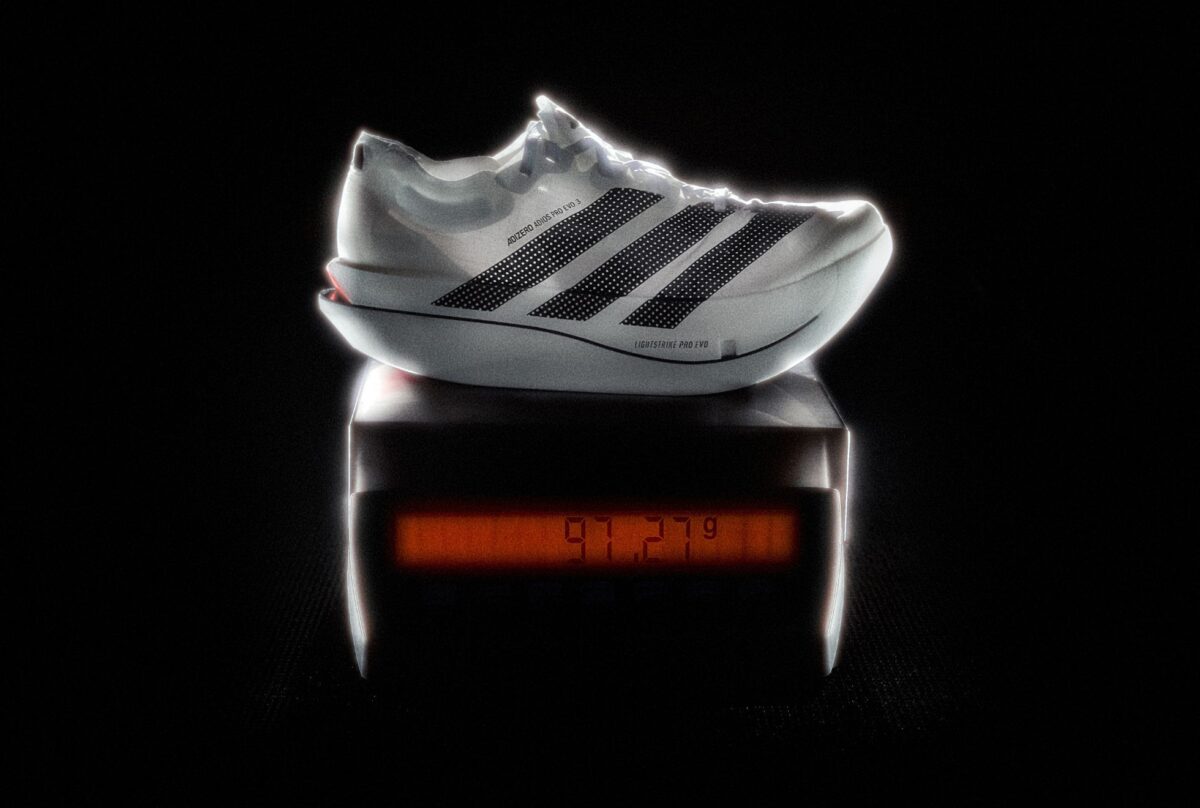
So what makes this thing so special? For starters, it weighs less than my house keys. Seriously – a men’s US 9 comes in at just 97 grams (about 3.4 ounces). That’s lighter than a deck of cards. It’s the first sub-100-gram marathon racer to hit the market, which is absolute insanity.
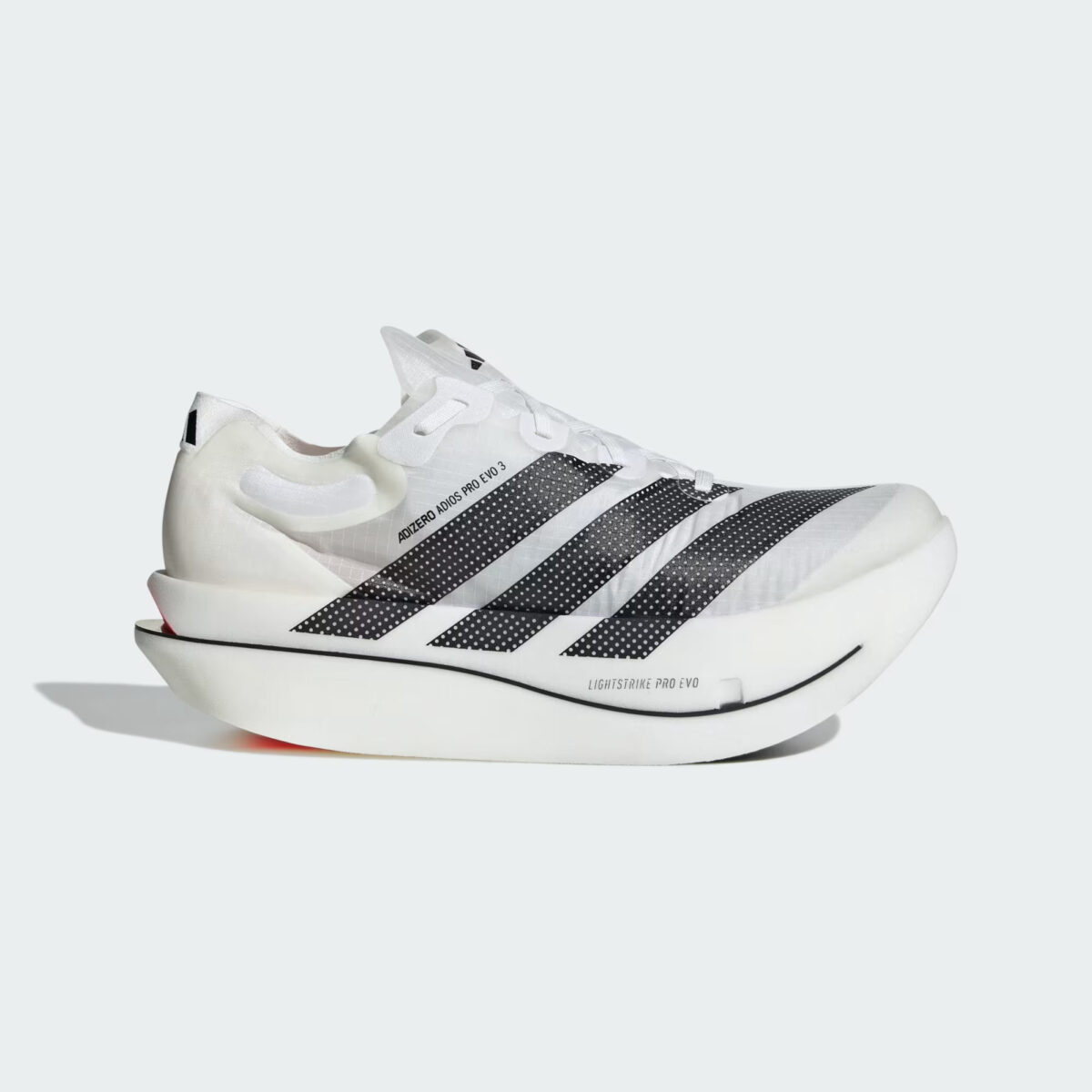
Here’s what we’re looking at with the Evo 3:
- 30% lighter than the already featherweight Evo 2
- 1.6% improvement in running economy (that’s HUGE at elite levels)
- 11% more forefoot energy return
- 39mm stack height with the new ENERGYRIM carbon system
- Lightstrike Pro Evo foam that’s about 50% lighter than previous versions
- Continental rubber outsole that somehow weighs next to nothing
- An upper so thin it’s practically see-through (inspired by kitesurfing sails!)
The biggest tech breakthrough here is that ENERGYRIM system. adidas ditched the EnergyRods from previous models and created this wild carbon-infused structure that fuses with the foam. It’s like they took everything we thought we knew about super shoe design and just… reinvented it.
I’ve seen prototypes go through testing phases before, but adidas claims they went through more than a dozen iterations of this shoe. They were measuring weight differences down to the nanogram. NANOGRAM. That’s some aerospace-level engineering for something you’re gonna trash over 26.2 miles.
The Evo Evolution: A Quick History
For those who haven’t been tracking this line as obsessively as I have (get on my level, people!), the Pro Evo series has been adidas’ ultra-premium marathon offering:
- Adizero Adios Pro Evo 1 (2023) – Debuted at Berlin where Assefa smashed the women’s world record with a shocking 2:11:53. Weighed 138g, cost $500, and only 521 pairs were released worldwide. I stayed up all night trying to score a pair and still struck out. Saw them hit resale for £2,500 – absolute madness.
- Adizero Adios Pro Evo 2 (2025) – Sawe and Assefa both wore these to win London last year. adidas beefed up the midsole for more energy return without adding much weight.
- Adizero Adios Pro Evo 3 (2026) – The sub-2 shoe. The barrier breaker. The game changer.
Since launching this line in 2023, adidas athletes have racked up multiple world records, dozens of major wins, and now the most significant marathon barrier in history. Nike had the early lead in the super shoe wars, but adidas just dropped the mic in spectacular fashion.
Release Details: How (and When) to Get Your Hands on a Pair

Here’s the deal – adidas did a very limited drop via the Confirmed app on April 27, 2026, just two days after Sawe’s record run. As expected, they sold out faster than I could enter my payment info. Trust me, I tried. My finger was hovering over that button the second they went live.
The good news? A wider release is coming for the fall 2026 marathon season, timed with the Berlin Marathon on September 27. Mark your calendars, set seventeen alarms, and maybe take the day off work.
The damage to your wallet? $500 USD / €500. Yeah, it’s steep. But this isn’t just any running shoe – it’s literally the shoe that broke the most significant barrier in endurance sports.
If you missed the initial drop (like me and probably 99.9% of humanity), the resale market is already a bloodbath. StockX has asking prices climbing into the thousands, with some larger sizes listed at $5,500 and the average hovering around $2,000. I’ve seen confirmed sales between a few hundred bucks over retail all the way up to $1,800.
Based on what happened with the Evo 1 (which hit £2,500 on resale), these aren’t going to be easy to find for a reasonable price anytime soon. I’m already putting money aside for the fall release because I NEED these in my rotation, even if they’ll probably disintegrate after two hard efforts.
What This Means for the Running Shoe World
This isn’t just another fast shoe – it’s a statement. For years, Nike has dominated the marathon scene with the Vaporfly/Alphafly platform and Kipchoge as their poster child. With Sawe’s official world record, adidas has completely flipped that narrative.
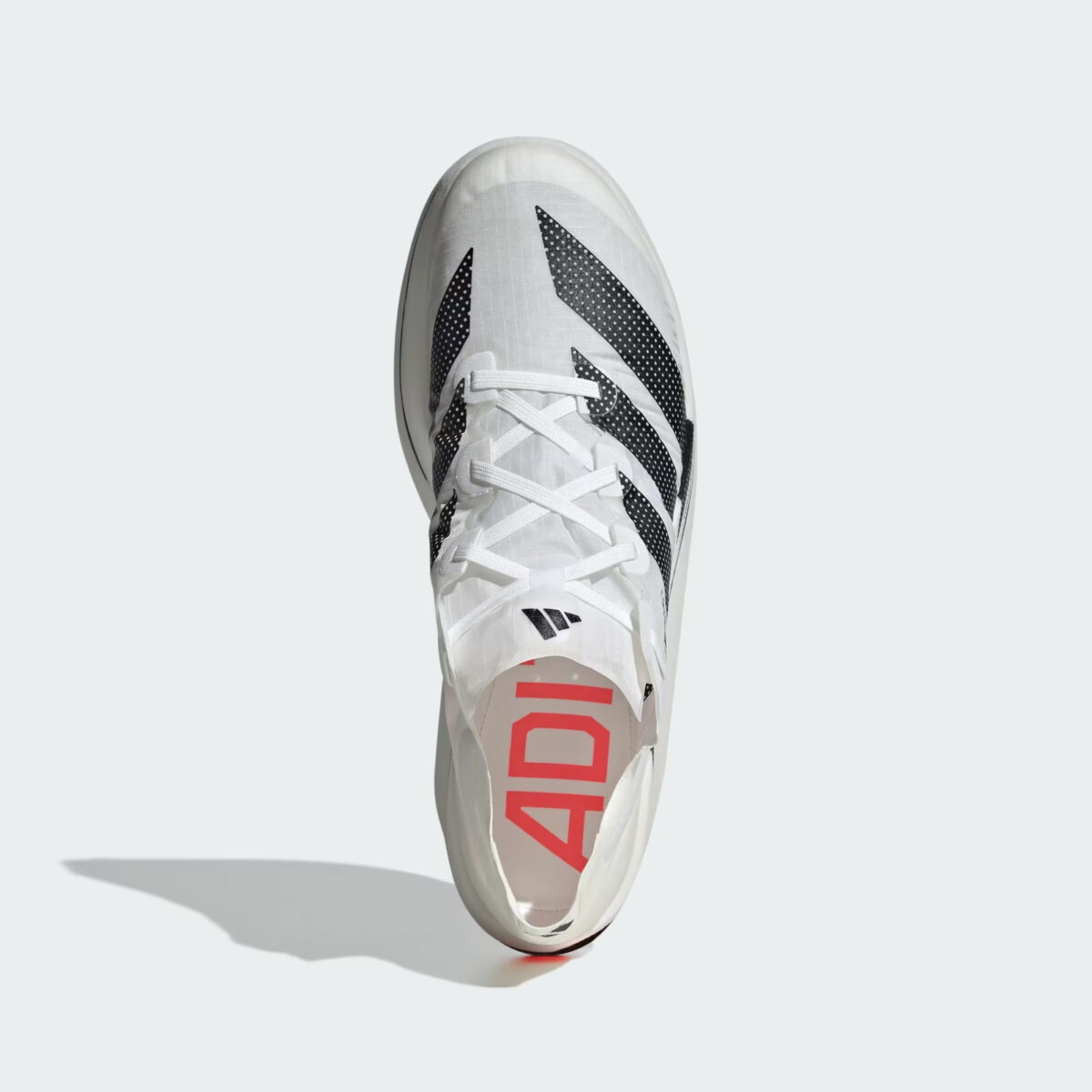
And they did it with a 97-gram piece of engineering that looks more like a ballet slipper than a running shoe. I mean, just look at this thing:
For everyday runners like most of us, the Evo 3 is probably overkill. The price tag alone puts it out of reach, not to mention the durability concerns (I’d be shocked if these last beyond 100 miles). But that’s not really the point. The technology pioneered here will eventually trickle down to more accessible models.
I’m already excited to see what elements make their way into the next Boston, the next mainline Adios Pro, and even their everyday trainers. This is how innovation works – the extreme leads the way for the mainstream.
My Take: Is It Worth the Hype?
Look, I haven’t had a chance to test these yet (working on it – if anyone from adidas is reading this, PLEASE hook me up!), but based on the specs and the results we just saw in London, this is the real deal.
Is it worth $500? For elite marathoners and serious sub-elite competitors with Boston qualifying aspirations, absolutely. For the average weekend warrior? Probably not, unless you’ve got disposable income and want the bragging rights of owning a piece of running history.
What I’m most excited about is what this means for the next generation of racing shoes. If adidas can build a sub-100g marathon racer that helps break the 2-hour barrier, what’s next? Will Nike respond with something even more extreme? Will we see 90g shoes? 85g? Where’s the bottom?
The super shoe arms race is officially in its next chapter, and as a complete shoe geek, I am HERE for it. My wallet’s not thrilled, but my inner running nerd is absolutely buzzing.
Final Thoughts: A Historic Moment
When I started this blog five years ago, I never thought I’d be writing about the shoe that broke the 2-hour marathon barrier. It felt like something that might happen in the distant future, not in 2026.
But here we are. History has been made, and the adizero adios pro evo 3 was the vehicle that got us there. Whether you’re an adidas fan or not, this is a moment worth celebrating for anyone who loves the sport of running.
I’ll be setting every alarm I have for the fall release. Will I pay $500 for shoes that’ll probably fall apart after two marathons? Absolutely. Because sometimes being a gearhead isn’t about practicality – it’s about owning a piece of history.
What do you think of the Evo 3? Are you planning to try and grab a pair? Drop a comment below and let me know if you think these are worth the hype or if you’re waiting for the technology to trickle down to more affordable options.
Until next time, keep chasing those PRs!
– Alex