

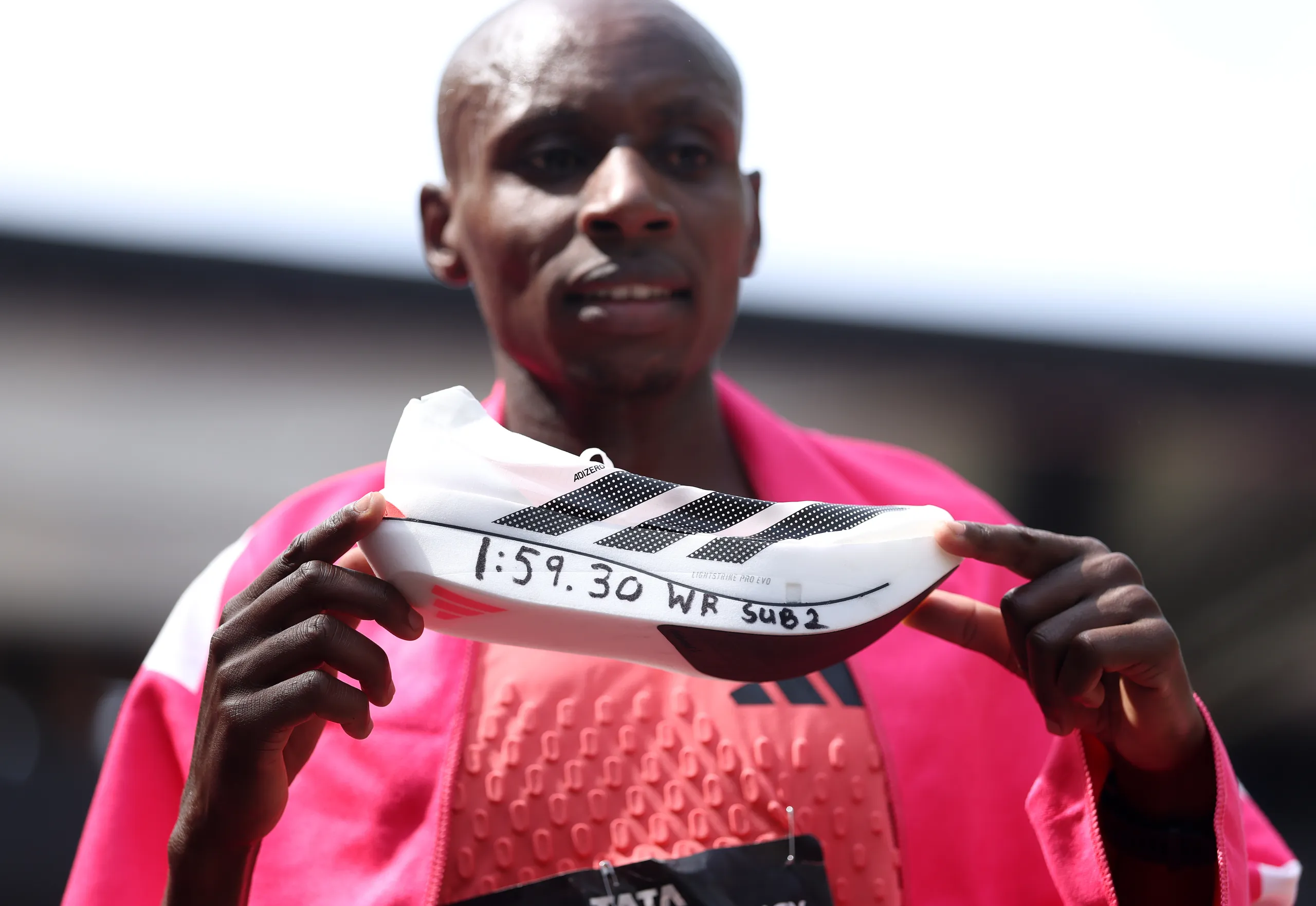
Look, I’m not gonna sugarcoat this – the running world just got flipped on its head. When Sebastian Sawe crossed that finish line at the London Marathon with a sub-2-hour time (in an official race, mind you), he wasn’t just wearing any old kicks. He was sporting what might be the most revolutionary marathon shoe ever created: the adidas adizero adios pro evo 3.
And guess what? I got my hands (well, feet) on them before most of you could even pronounce the name correctly. Let’s dive into this absolute game-changer of a super shoe that’s got the entire running community buzzing.
The $500 Question: Is This Thing For Real?
First things first – yes, you read that price tag right. Five. Hundred. Dollars. That’s PlayStation 5 money. That’s “I could buy three pairs of decent running shoes” money. But here’s the kicker (pun absolutely intended): adidas isn’t even pretending this shoe is for everyone.
Charlotte Heidmann, adidas’s Adizero category director, straight-up said it: “From the start, when we introduced the first model, it was always built for our key elite athletes and the runners that are really running superfast marathons.” They’re targeting sub-3-hour marathoners, which, let’s be real, isn’t your average weekend warrior.
But you know what? That’s not gonna stop me – or you – from wanting a pair. Because FOMO is real, and the tech in this thing is absolutely bonkers.
Featherweight Champion of the World
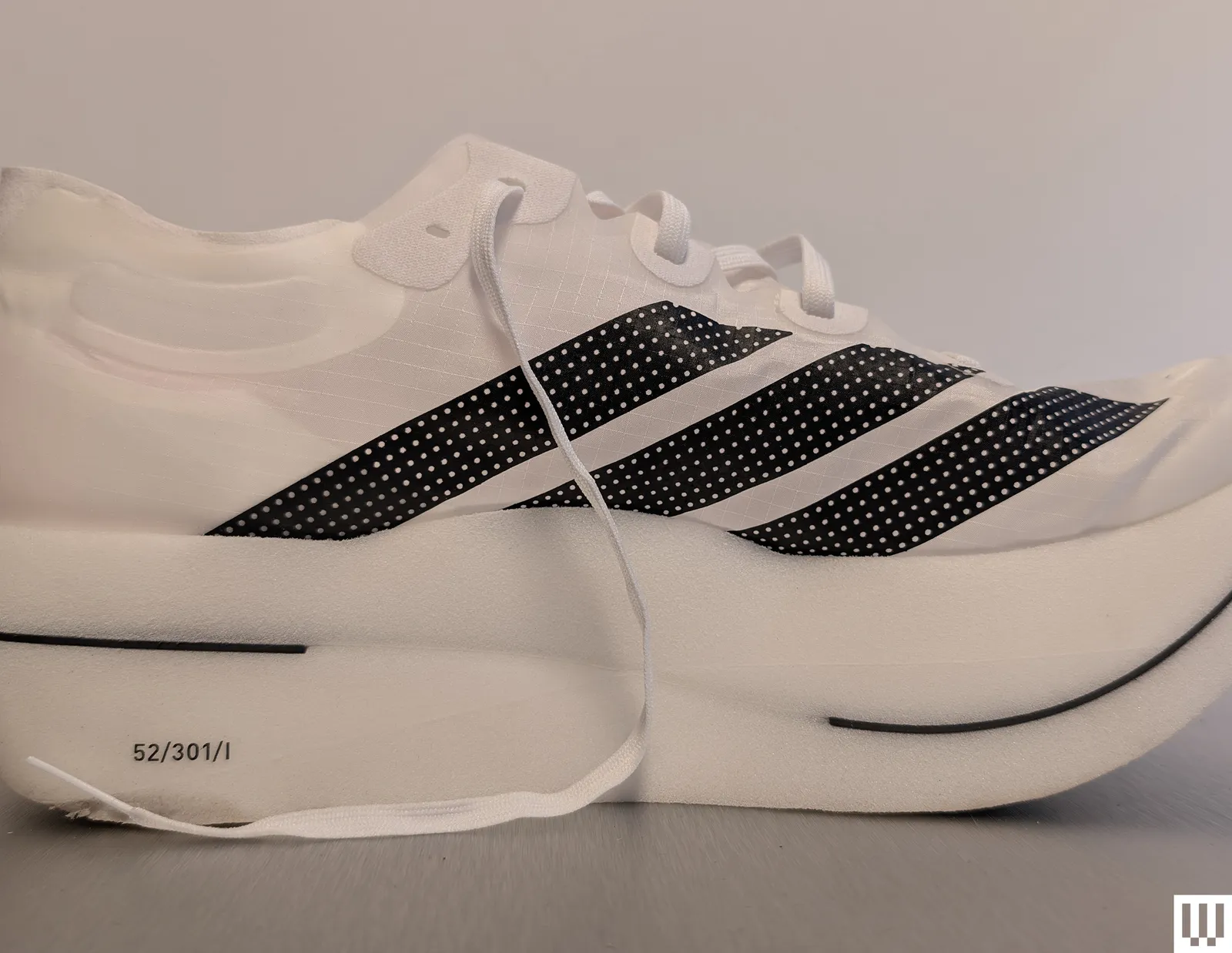
I’ve held a lot of running shoes in my day. I’ve tested everything from clunky stability trainers to the sleekest racing flats. But nothing – and I mean NOTHING – prepared me for how ridiculously light the adios pro evo 3 feels. We’re talking under 100 grams (97g for a UK 8.5). That’s about 3.5 ounces!
For perspective, that’s roughly 150g lighter than the Nike Alphafly 3. It’s like comparing a paperclip to a stapler. When I first picked them up, I literally laughed out loud – they barely register in your hand. It’s as if adidas somehow managed to defy the laws of physics.
The science nerds will tell you that every 100g you shave off a running shoe reduces the aerobic demand by about 1%. So if you’re doing the math, that’s potentially a massive advantage over the course of 26.2 miles.
What’s Changed from the Pro Evo 2?
I ran a 1:20 half marathon PR in the previous Pro Evo 2 last year, but man, that shoe had some issues. The grip was so sketchy on wet surfaces that I was more focused on staying upright than hitting splits. And while it was fast, it didn’t feel $250 better than competitors like the Asics Metaspeed Edge or the Puma Nitro Elite.
The Pro Evo 3 fixes those problems – and then some.
Grip That Won’t Slip
First major upgrade: adidas ditched that sketchy liquid rubber coating for strategically placed Continental rubber in the forefoot and heel. If you’ve ever run in adidas shoes with Continental rubber, you know this is a game-changer for wet conditions. No more feeling like you’re running on ice when it drizzles.
Foam Party
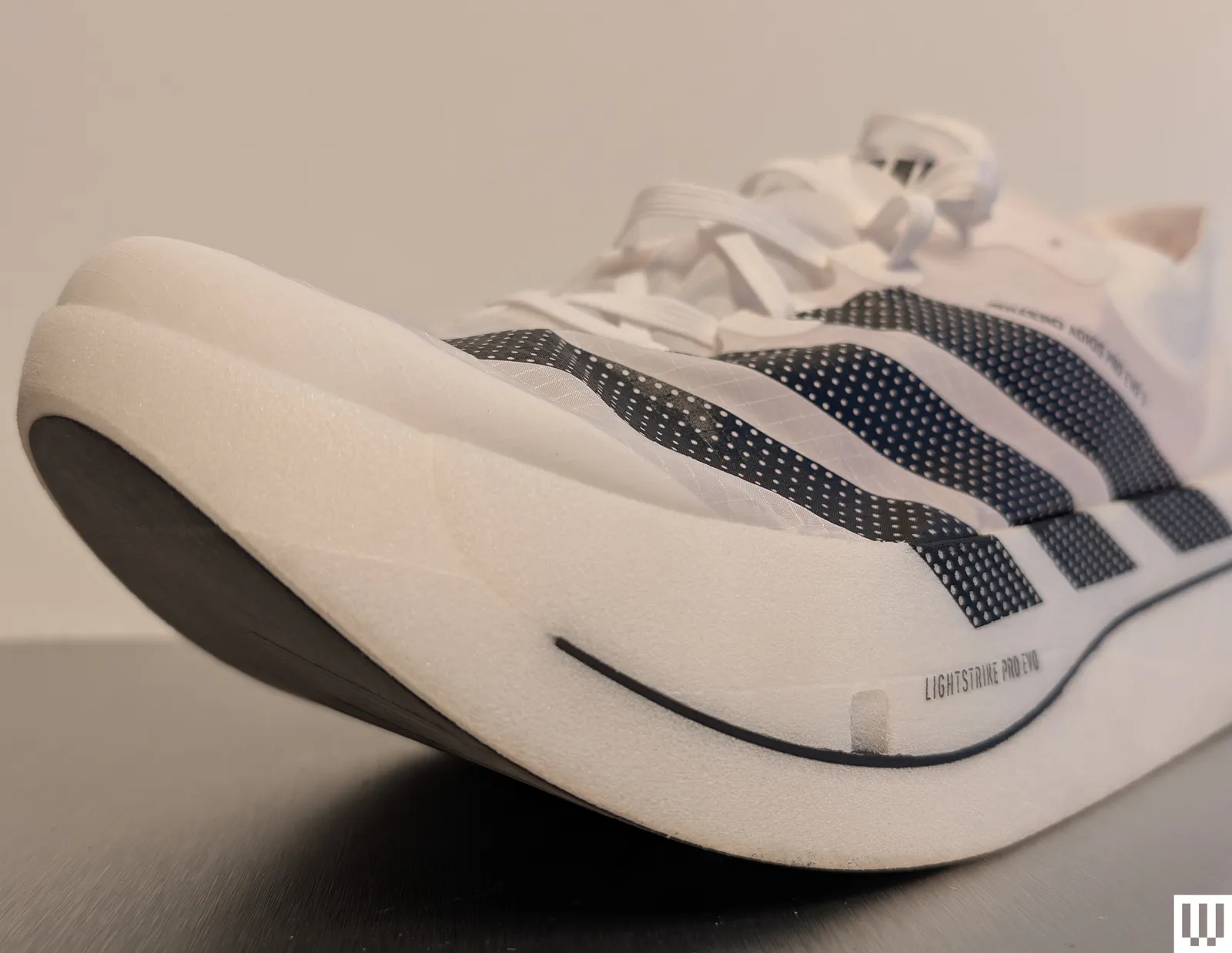
The midsole is where things get really interesting. The new Lightstrike Pro Evo foam weighs about 50% less than what was in the Pro Evo 2. Usually, lighter foam means compromised cushioning and energy return, but adidas claims this is both their lightest AND most responsive foam to date.
After putting in some miles, I’m inclined to believe them. The bounce is real, folks. It’s softer than the Pro Evo 2 but with this springy, lively energy that just begs you to pick up the pace.
The Secret Weapon: ENERGYRIM
Between two layers of this super foam is what adidas calls a “carbon-fiber-infused energy rim” – basically a carbon ring that runs around the outer edge of the midsole. This is a total departure from the traditional carbon plate design we’ve seen in most super shoes.
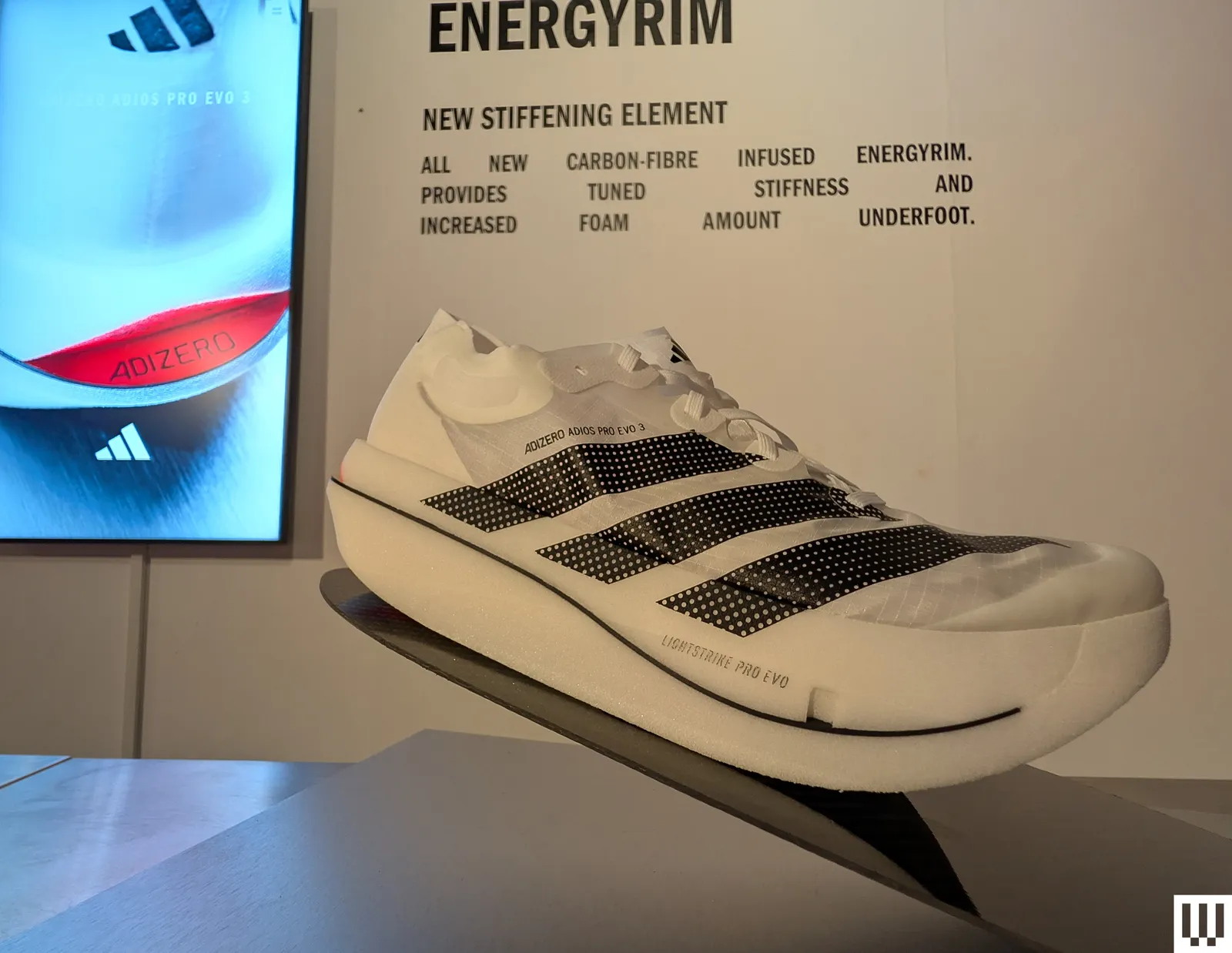
According to Heidmann, elite athletes wanted more comfort in the forefoot, so the science team came up with this rim design where “you’re really stepping onto the foam, and you get stability from the outside.” It adds propulsion while still letting you feel that soft, bouncy foam directly underfoot.
It’s genius, honestly. Most carbon-plated shoes have that distinctive snappy feel, but this is different – it’s like getting the benefits of carbon without sacrificing the plush sensation of premium foam.
My Test Run Experience
I managed to clock about four miles in these unicorns on a curved Woodway treadmill. The plan was to shoot for a 5K PB, but I was running blind with no pace display, just relying on my trusty Garmin Forerunner.
From the moment I laced up, the shoes felt like they belonged on my feet – which isn’t always the case with carbon racers. The upper is inspired by kite-surfing materials (random, but cool) and is way more pliable than the Pro Evo 2’s upper. Your toes have room to flex, and there’s this incredible barely-there sensation that makes you feel like you’re running in high-tech socks rather than actual shoes.
The midsole is where the magic happens. It’s markedly softer than the previous version, with a fun, springy bounce that makes you want to pick up the pace. The curved rocker geometry is similar to the Pro Evo 2, rolling you quickly onto your forefoot and encouraging a fast turnover and lively toe-off.
What surprised me most was how well it worked at various paces. Sure, it shines when you’re locked into race pace with good form, landing mid-to-forefoot with purpose. But even during my warm-up mile at a more relaxed pace, it felt surprisingly accommodating. The ENERGYRIM provides just enough control over that super-compressive foam to keep things stable.
For a shoe this minimal, I was shocked by how protective it felt. While I only ran for 40 minutes on a treadmill, my gut tells me that this shoe would still provide decent protection if you hit the wall at mile 20 of a marathon – which is not something I’d say about most sub-100g shoes.
Who Should Actually Buy This Shoe?
Let’s get real for a second. I’ve run 66 marathons, and I can tell you with absolute certainty that 99% of runners do not need a $500 shoe. PRs can happen in much more affordable footwear – heck, they don’t even have to be carbon-plated shoes.
The Adizero Adios Pro Evo 3 is built for a very specific type of runner: fast forefoot strikers who can maintain their form throughout a race. If you’re a heel striker or your form deteriorates significantly when fatigue sets in, you might not get the full benefit of this shoe.
That said, if you fit the profile, have the pace credentials, and don’t mind dropping half a grand on running shoes, the Pro Evo 3 feels like the real deal. It’s the closest thing to strapping rockets to your feet that I’ve experienced.
But there’s a catch – you’ll have to be quick (and lucky) to get a pair. Only a limited number went on sale with the initial launch, with more expected to drop during fall marathon season. And after Sawe’s historic sub-2 performance, you can bet these will sell out faster than Beyoncé tickets.
The Bottom Line
The adidas adizero adios pro evo 3 represents a genuine leap forward in running shoe technology. It’s not just an iteration; it’s a complete rethinking of what a super shoe can be. From the sub-100g weight to the innovative ENERGYRIM design to the new generation of Lightstrike Pro Evo foam, everything about this shoe screams “record breaker.”
Is it worth $500? For the vast majority of runners, probably not. But for those chasing BQs, podium spots, or just the absolute cutting edge of running tech, this shoe delivers something special that no other current super shoe can match.
The real question isn’t whether this shoe is good – it’s exceptional – but whether your wallet and your running style align with what adidas has created. This is a specialized tool for a specialized job, and it does that job better than anything else on the market right now.
And if nothing else, the adios pro evo 3 has raised the bar for what’s possible in running shoe design. The competition will be scrambling to catch up, and we runners will ultimately benefit from the innovation race that’s sure to follow.
Until next time, keep chasing those PRs – whether in $500 super shoes or your trusty old trainers.
– Alex